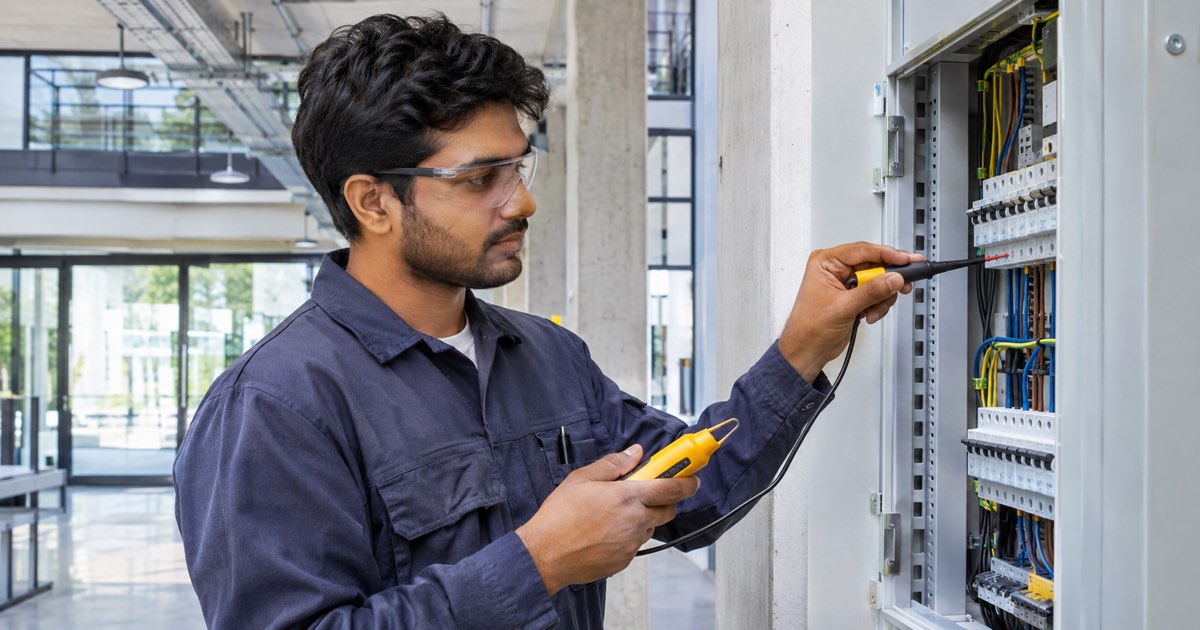
Indian electricians can work in Germany when a German employer offers a real skilled job and the visa rules fit their training and experience. For many installation electricians, the practical-experience work visa is the route to examine first. The key point is that a job offer alone is not enough: your vocational training, work history and the proposed salary must meet the official conditions.
Which German work route can an electrician use?
An electrician is normally a non-regulated occupation when you are employed by a company. That means you do not automatically need a German licence before starting every employed role. However, a person who wants to run a regulated craft business independently can face different rules. Use the official recognition guidance and ask the employer which activity and federal state apply.
The visa for professionally experienced workers can suit a qualified electrician from outside the EU. The employer gives you the contract and usually a Declaration of Employment. The Federal Employment Agency checks whether the job conditions match those offered to comparable workers in Germany. The visa is not a permit for an agent to find you any job after arrival. It is based on the particular qualified employment offered.
Another possible route is a visa for qualified professionals after German recognition of your training. Do not pick a visa from an advertisement. Ask the German mission or use the official portal once you have the exact contract and qualification documents.
Requirements for electrical work
For the experienced-workers route, the official portal says a non-academic qualification normally needs at least two years of training and must be recognised by the state where it was obtained. You also need evidence of at least two years of qualified, related experience from the previous five years. The job must be a concrete offer in a non-regulated profession. Keep your ITI or diploma certificate, marksheets, employer reference letters, detailed CV and passport ready.
Germany may ask for a formal check of the foreign qualification. The recognition page explains that the authority depends on the profession and federal state, and that documents can need certified translation. Even when a route does not require full German recognition, do not assume that every Indian certificate is accepted without evidence. Your prospective employer can help identify the correct body.
The cited experienced-workers page sets a salary threshold and has an alternative where the employer is bound by a collective agreement. Because thresholds change, read the current page and compare the signed contract with it before applying. It does not set a general German-language exam for this visa. Still, electrical safety briefings, site instructions and trade training are commonly in German, so basic German makes recruitment and work safer. Never claim you passed a test that you did not take.
Steps from India to the German workplace
- Look for a direct employer through the official Make it in Germany route, company careers pages or a verified vacancy. Ask for the full company name, work location, job duties, hours, pay and whether it is a collective-agreement role.
- Check your qualification route. Gather training certificates, proof of experience, identity documents and translations requested by the German authority or embassy. Do not pay a recruiter to invent employment letters.
- Read the contract before signing. It should name the employer and electrician duties, not merely promise work after a training charge. Keep a signed copy.
- Submit the national-visa application through the German mission responsible for your residence or the official Consular Services Portal where available. The official visa guidance says appointment and processing times differ by location, so apply early.
- Check the ECR mark in your Indian passport. Germany is not on India's listed ECR countries, so an ECR passport does not create an India emigration-clearance requirement for a Germany job. The MEA FAQ explains that clearance applies to ECR passport holders taking employment in listed ECR destinations. Keep the visa and contract with you for travel.
Real costs and who should pay them
The German entry-visa fee for a long stay is 75 euros; the Federal Foreign Office also lists this national-visa fee. This fee is paid in the official application process and is not refunded if the application is refused. Translation, certification, qualification assessment, travel and accommodation can cost money, but their price depends on the provider and location. Ask for a written quote rather than trusting a package price.
Scams and illegal fees
Do not transfer money for a “guaranteed embassy appointment”, visa approval or a German job offer. The official portal warns that no extra payment to a third party makes a visa faster or more certain. If you use an Indian recruiting agent, verify that it is registered. The MEA guidance describes checks on recruiting agents and the documents used in overseas recruitment. Walk away from a recruiter who refuses to identify the German company, keeps your original passport, asks for cash without a receipt, changes the job after payment, or says you should enter as a visitor and work later. Keep copies of every contract, receipt and message, and ask the employer directly to confirm the vacancy before you pay any private service fee.
Pay and rights
Your contract must satisfy the visa route, but it must also respect German labour law. Germany's federal labour ministry says the statutory minimum wage is 13.90 euros gross per hour from 1 January 2026, including for foreign workers in Germany. An electrician with scarce skills may earn more, but do not rely on a salary figure from a recruiter. Compare the contract with the visa threshold or applicable collective agreement. A genuine visa application is decided by German authorities, not the employer or recruiter.
Questions people ask
Do Indian electricians need German recognition?
It depends on the job and visa. Employed electricians are often in a non-regulated occupation, but recognition can be required for a particular route or activity. Check the official recognition guidance and the authority for the federal state.
Can I get a German electrician job with an ITI certificate?
An ITI or other vocational certificate may be useful, but the visa route checks the length and official status of training, your related experience and the specific job offer. The German authority decides on the evidence.
What is the German work-visa fee?
The official national-visa fee is usually 75 euros. Pay it only through the German embassy, consulate or official application process.
Do I need eMigrate clearance to go from India to Germany?
Germany is not one of India's ECR destinations. The MEA says ECR clearance applies when an ECR passport holder takes work in a listed ECR country.
Can an agent guarantee my German work visa?
No. Only German authorities decide a visa application. Treat guarantees, paid priority appointments and unexplained charges as warning signs.
Official sources: Make it in Germany: Visa for professionally experienced workers, Make it in Germany: Recognition of vocational and academic qualifications, Make it in Germany: How do I apply for a visa?, Federal Foreign Office: Visas for Germany and visa fees, Ministry of External Affairs, India: FAQ on intending emigrants, Ministry of External Affairs, India: Guidelines for the Emigration Clearance System, Federal Ministry of Labour and Social Affairs: Germany's minimum wage